
Vermont CPA Exam Requirements 2026
A qualified candidate can use the Vermont route with 120 semester hours, subject to every other published rule. Check your education, application route, current known fees, deadlines, and next steps in one place.
Vermont CPA requirements at a glance
Exam eligibility and CPA licensure are different decisions. This page leads with the rules to sit and keeps licensing information in a separate comparison.
Recent rule activity: Do not treat a proposed or future-effective pathway as current.
- Enacted And Effective: Effective on passage June 8, 2026, Vermont recognizes a post-baccalaureate accounting degree plus one year of public-accounting experience, a 150-hour bachelor's route plus one year, or a bachelor's accounting degree plus two years. Effective June 8, 2026.
Are you eligible for the CPA Exam in Vermont?
Vermont allows a qualified candidate to sit at 120 semester hours. The application authority makes the final decision from official documents.
What to confirm before applying
- Meet the published good-moral-character requirement.
- Complete at least 120 semester hours.
Named coursework and accreditation
- Accounting: financial and managerial accounting.
- Accounting: auditing.
- Accounting: United States taxation.
- Business: United States business law.
- 30 combined semester hours in accounting and business, including 6 hours of financial and/or managerial accounting, 3 hours of auditing, 3 hours of U.S. taxation, and 3 hours of U.S. business law.
Credits must be from an accredited or Board-recognized institution.
| Question | Current answer | Action |
|---|---|---|
| Can I sit before 150 hours? | Yes, if every other requirement is met. | Keep licensing education separate from exam eligibility. |
| Can I apply before the degree is awarded? | A degree is not required to sit; complete every published credit-hour and subject requirement by the applicable deadline. | Follow every final-transcript deadline. |
| Must I live in the jurisdiction? | No Vermont jurisdiction-residency rule was identified. | Check separate U.S. residency, citizenship, SSN, and identity rules. |
| Are nontraditional credits accepted? | Treatment differs by credit type. | Use the credit-treatment checklist below and confirm unknowns. |
Education-hour details
| Requirement | Semester hours | Quarter hours | Details |
|---|---|---|---|
| Total college credit | 120 | 180 | The 30-hour requirement is one combined accounting-and-business block, not 30 accounting hours plus 30 business hours. Commercial CPA-review courses do not count. |
| Accounting | Required; no separate numeric minimum | Required; no separate numeric minimum | Named subjects: financial and managerial accounting, auditing, United States taxation. |
| Business | Required; no separate numeric minimum | Required; no separate numeric minimum | Named subjects: United States business law. |
Credit types to confirm
- Community-college credit: Allowed subject to the published conditions
- Online credit: Allowed subject to the published conditions
- CLEP credit: Allowed subject to the published conditions
- AP credit: Allowed subject to the published conditions
- Pass/fail credit: Confirm with the application authority
- Internship credit: Allowed subject to the published conditions
Vermont eligibility gap planner
Enter your education and personal details to compare them with the published Vermont requirements. Nuanced course classifications still require an official evaluation.
Check 2 published eligibility gates
Your answers stay in this browser and are not submitted to CPA Exam Guide.
Eligible—or getting close? Discover how you learn best.
Take the CPA Study Personality Quiz before choosing materials so your study approach matches how you retain information.
How to apply for the CPA Exam in Vermont
NASBA CPA Examination Services (CPAES) is the application authority. Application method: online through NASBA CPA Portal.
Your application sequence
- Audit your transcriptsMatch total hours, degree status, accounting, business, and named-course requirements.
- Read the current official instructionsConfirm personal rules, deadlines, fees, and the exact application route.
- Submit the applicationApply through NASBA CPA Examination Services (CPAES) and pay the amount shown in the live application.
- Send official documentsArrange transcripts and evaluations through the method required by the application authority.
- Resolve follow-up requestsMonitor the applicant portal and respond to education or identity questions.
- Download the NTS and scheduleUse the exact name and expiration printed on the Notice to Schedule.
Documents to prepare
- official transcripts.
- completed CPA Portal application.
- enrollment confirmation when courses are in progress.
Processing time
Two to four weeks from the file-completion date.
Always follow the live application instructions in case a recipient, document method, address, or fee has changed.
Build your Vermont application plan
The calculators use currently published numeric fees and time limits. Any amount or period not published is excluded.
CPA Exam cost calculator
Calculate the currently published fee components. Charges not listed by the application authority are excluded.
6-month NTS planner
Estimate the end of the published NTS period before purchasing more sections than you can reasonably take.
Vermont application checklist
Check off each step as you finish it. Progress is stored only in this browser.
See what the CPA Exam journey feels like—while fighting off zombies.
Open CPA Exam Survival inside the CPA Exam Arcade and choose Story Mode. You will experience a playful version of the journey from signing up through studying and sitting for the exam.
Choose Story Mode when the game opens. This is an educational game, not an official AICPA or Prometric exam simulator.
Vermont exam, NTS, and retake rules
Eligibility gets you into the exam. These rules determine how long your authorization and passing scores remain useful.
Pass four sections with a 75
Pass AUD, FAR, and REG plus one discipline: BAR, ISC, or TCP. Each required section uses a passing score of 75.
- Core sections are generally available through continuous testing.
- Discipline sections follow the applicable AICPA administration windows.
- Schedule only sections you can reasonably prepare for before the NTS expires.
Your 30-month credit window
NASBA advises candidates to apply only for a section they are ready to take within the next six months.
- Discipline sections follow AICPA testing windows.
Check CPA score-release timing · Compare how long CPA Exam scores last.
Compare review courses by the support you actually need.
Evaluate teaching style, practice tools, access length, guarantees, and total price before spending.
Important limits for international candidates
Foreign-education acceptance, the application jurisdiction, and the country where you physically test are separate decisions.
If your education was earned outside the U.S.
- Foreign education accepted: Yes, subject to evaluation conditions
- Credential evaluation required: Yes
- NIES required: No—use an evaluator accepted by the jurisdiction
- Approved evaluation services: NASBA International Evaluation Services (NIES), NACES-member evaluation service
- Certified translation: Required
Confirm evaluator acceptance before purchasing a report.
If you want to test outside the United States
An international Prometric location does not create independent CPA Exam eligibility. You must first qualify through a participating U.S. jurisdiction.
Confirm that Vermont participates for the country where you want to test and check the international administration fee before scheduling.
Check NASBA's current international administration list · Compare CPA jurisdictions for international candidates.
Vermont CPA licensure comparison
Passing the exam is not the same as receiving a CPA license. This limited comparison prevents the licensing threshold from being mistaken for the rule to sit.
| Requirement | To sit for the exam | For licensure |
|---|---|---|
| Education | 120 semester hours plus all applicable degree and coursework requirements | Varies by pathway; review the current routes below |
| Experience | Not treated as an exam-sitting requirement unless the application instructions expressly say otherwise | Varies by pathway; use the experience term stated for your route below |
| Ethics exam | Separate from the Uniform CPA Exam | Required |
| Alternative pathway | Do not apply a licensure alternative automatically to exam eligibility | Enacted And Effective: Effective on passage June 8, 2026, Vermont recognizes a post-baccalaureate accounting degree plus one year of public-accounting experience, a 150-hour bachelor's route plus one year, or a bachelor's accounting degree plus two years. |
Current licensure pathways
Choose the route that matches your education and experience. These are licensure routes, not automatic exam-admission rules.
Post-baccalaureate degree plus one year
Post-baccalaureate degree with an accounting concentration or equivalent and one year of public-accounting experience.
Effective: June 8, 2026
150 hours plus one year
Bachelor's degree, at least 150 semester hours including 42 semester hours in accounting, auditing, and related subjects, and one year of public-accounting or substantially equivalent experience.
Effective: June 8, 2026
Bachelor's degree plus two years
Bachelor's degree with an accounting concentration or equivalent and two years of public-accounting experience.
Effective: June 8, 2026
Pathway timing matters: Effective date: June 8, 2026. Licensure pathway only; do not infer a change to the separate examination-eligibility rule.
Vermont CPA Exam requirements FAQ
How many college hours do I need to sit for the CPA Exam in Vermont?
Vermont currently lists 120 semester hours for exam eligibility. A degree is not required to sit, but every accounting, business, and personal requirement still applies.
Do I need 150 semester hours to sit in Vermont?
No. Vermont allows a qualified candidate to begin testing before completing 150 hours. Licensure education is a separate requirement.
Do I have to live in Vermont to take the CPA Exam?
No Vermont jurisdiction-residency requirement applies to exam eligibility. Other personal requirements can still apply.
Can I apply before my degree is awarded in Vermont?
Vermont does not require a degree to sit. Every published credit-hour and subject requirement must still be complete by the application deadline unless the official instructions expressly provide otherwise.
How much does the CPA Exam application cost in Vermont?
The current known first-section total is $460.59, using every mandatory fee layer in the verified snapshot. Returning-candidate and later-section totals can differ. Always confirm the live amount before payment.
How long do Vermont CPA Exam credits last?
Vermont provides a 30-month examination-credit window. Follow the jurisdiction's exact start-date rule and the expiration shown in your candidate account.
Can I use education earned outside the United States for Vermont?
Vermont accepts foreign education subject to an approved credential evaluation. Use an evaluation service accepted by the application authority.
Your next CPA Exam research steps
Use this Vermont page as your eligibility command center, then move into application timing and study-material research.
Official Vermont sources used for this guide
Open the controlling source before paying a non-refundable fee if your education, residency, identity, or pathway is unusual.
Confirm your situation before applying: We reviewed each requirement against the official sources below. Rules, fees, and Board interpretations can change quickly and sometimes without a widely distributed announcement, and your transcript or circumstances may be evaluated differently. Before you apply, pay a fee, or enroll in coursework, confirm your situation directly with NASBA CPA Examination Services (CPAES).
- Vermont CPA ExamNational Association of State Boards of Accountancy · NASBA
- H.588 as Passed by the House and SenateVermont General Assembly · Official Legislation
Editorial standard: Proposed rules are not presented as effective, and interactive results are planning guidance rather than official eligibility determinations. Official sources last reviewed: August 8, 2026.
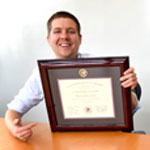
Reviewed by Bryan Kesler, CPA
Bryan Kesler is the founder of CPA Exam Guide. Regulatory eligibility is always determined by the applicable Board or examination authority.